
Climate-Smart Agriculture: The Role of Water Management
Last decade the use of freshwater was 3999 km3 per year, which is over 1 trillion gallons! Can you imagine that? Human used 1 trillion gallons of freshwater a year. However, the interesting part is that most of it — about 69% — is used for agriculture. Freshwater supply is one of the most important ecosystem services. In this blog, we’ll look at where all that water goes and how we can reduce the amount used.
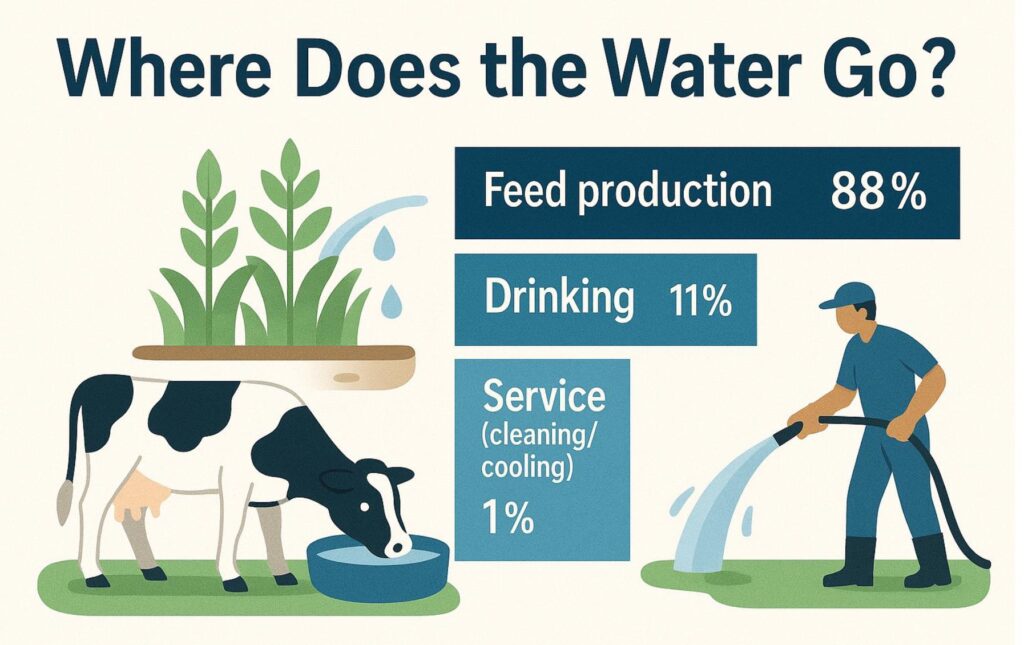
In agriculture, 88% of water is used for feed production (growing crops), 11% for animal drinking, 1% for services (cleaning, cooling animals). Overall, agriculture alone takes 70% of all fresh water, making it the biggest consumer.
Importance of Water in Animal Husbandry
Producing food from animals also requires a lot of water. For example, producing 1 kilogram of beef uses about 15,000 liters of total water (including rainwater, groundwater, and surface water). However, only around 500–700 liters of that is freshwater — the rest is mostly rainwater used to grow feed crops.
Chicken meat takes around 4,000 liters, milk about 1,000 liters per liter, and eggs about 3,300 liters per kilogram. These numbers show how much water is used for our daily meals, which we rarely think about.
How to reduce this?
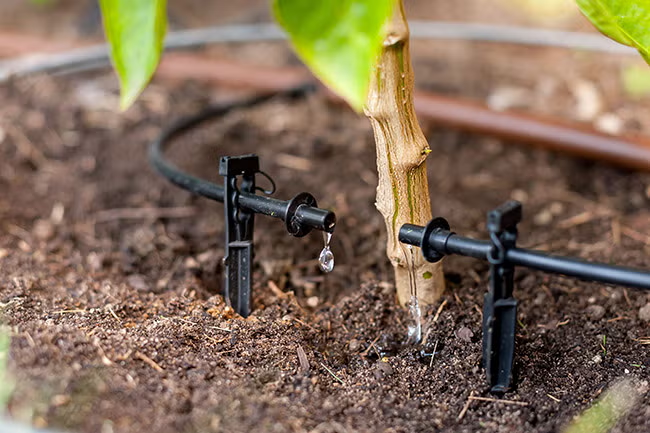
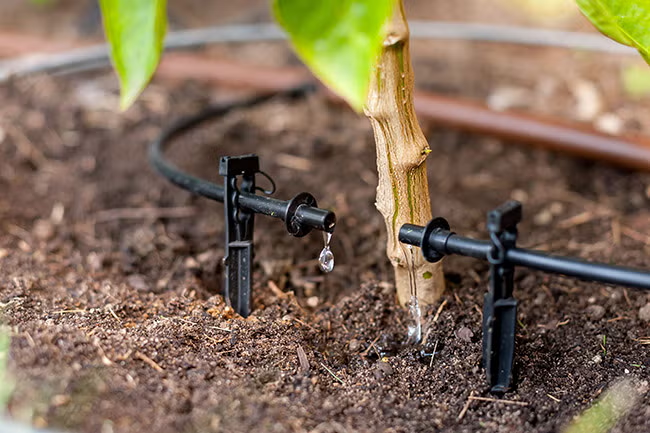
To reduce this, many farmers have adopted smart and sustainable technologies. For example, drip irrigation systems, which is watering only the roots of the plants (see pic below). This method can reduce water usage by 50% percent.
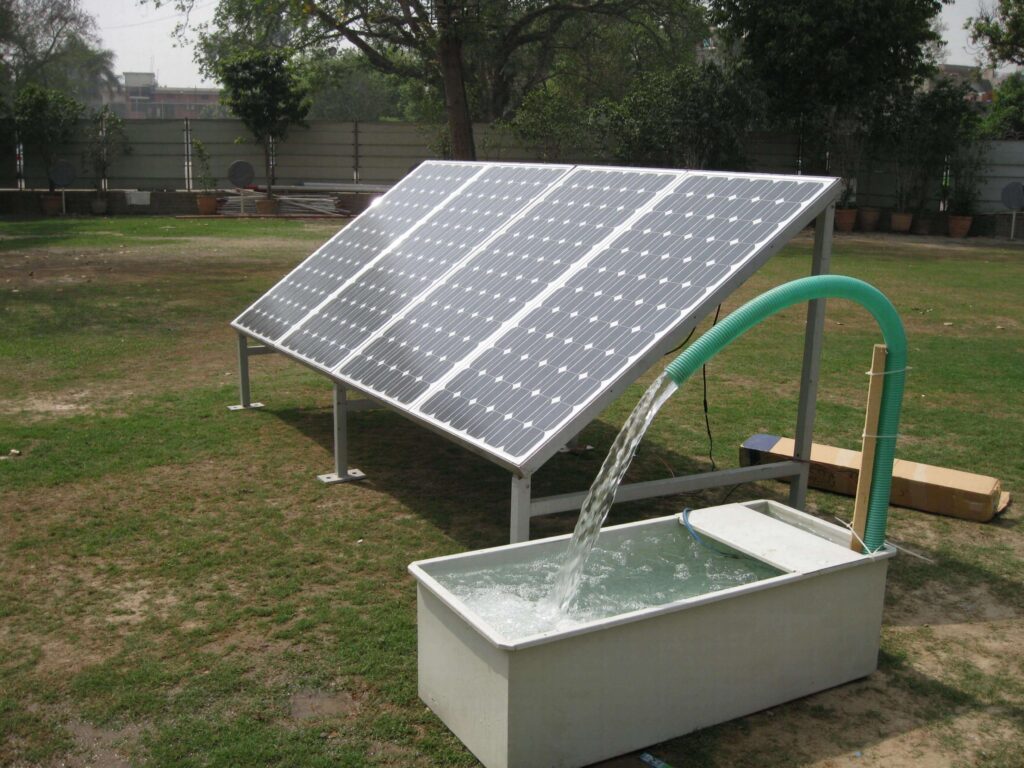
Another method is called solar-powered boreholes to supply clean water to livestock. This method is very effective, but a bit hard to understand. First of all, as you see in the pic below, there are solar panels. These panels produce energy from the sun. Then, they use this energy to pump up the water that comes from borehole (underground) to tanks for animals to drink. Of course, the water does not come to a tank like in the pic, rather to a large tank to store.
OK, these methods were smart and effective. Now, I’ll talk about another method, but this one is a bit dirty. This method is called “reusing biogas slurry”. So, on farms, animals urine, dung, and get washed. These make a mix of manure + urine + washing water (mostly dirty waste). Instead of throwing all these away, farmers collect them into a biogas digester (a big, closed tank). They close this tank so no oxygen can get in. Then, bacteria start breaking down the waste and releases biogas. That gas goes up to the tank and gets collected for energy. But, that’s not what we’re looking for. What’s left at the bottom is the biogas slurry (the nutrient-rich water but as liquid). This liquid is, then, used for watering crops or fertilizing soil.
I know, it sounds crazy, but it works.
Technology in Water Management
Technology is also making water use smarter. Farmers now use IoT-based water tank sensors that monitor water levels and detect leaks automatically (basically, the tech checks water tanks to see if there’s a problem, and sends data to farmers). Some even use water footprint calculators to understand exactly how much water each activity or product consumes (this is what we said earlier, like to get 1 kilogram beef we spend 15000 liters of water. The tool helps to calculate this). These innovations help farmers make data-based decisions and use every drop more efficiently.
OK, guys. We understood Climate-Smart Agriculture and Water Management. So, water is not just a source, it’s actually foundation of life, food, sustainability. We must manage it wisely, in order to secure our future.
Subscribe to get notified when new post is published!
