
Data Use in Farming – Smart Agriculture
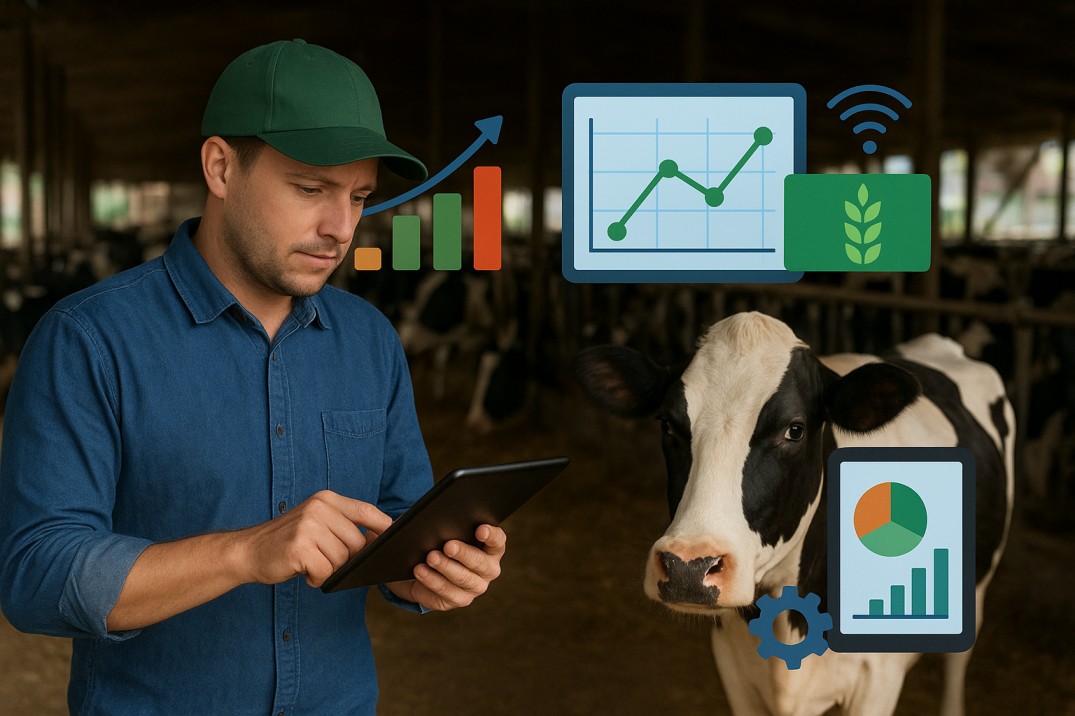
Data collection is a very important and useful process in agriculture. Especially in farming, it helps make the work more efficient and high-quality. In this blog, we’ll talk about how working with data can help in 4 main areas of farming.
1. Poultry (raising chickens, ducks, etc.)
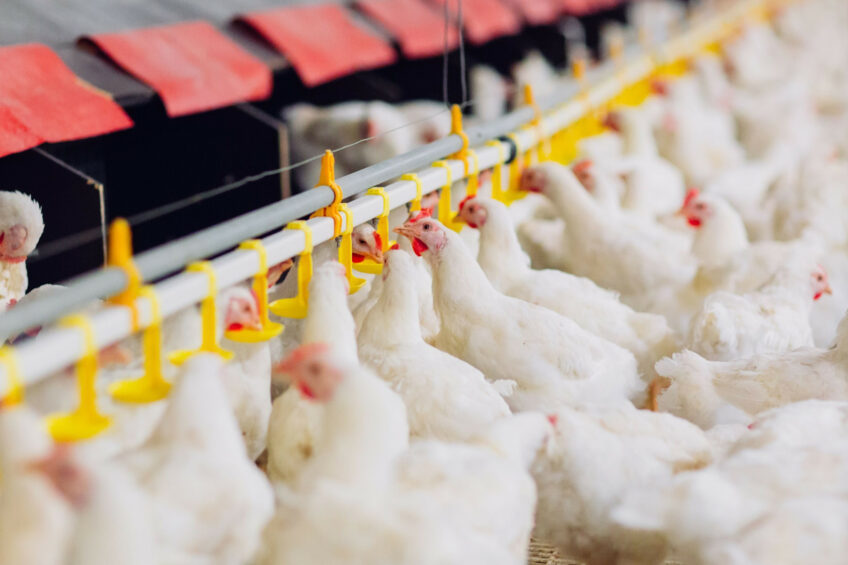
In poultry farming, collecting data helps increase productivity and protect the environment.
Feed Efficiency and Nutrition Management
By collecting data like weight gain, feed intake, and growth rate, farmers can improve feed efficiency (FCR). As a result, costs go down and birds grow healthier.
Let’s give an example. A farmer collects data about the birds mentioned above. He notices that Group 1 birds eat more but gain less weight. This helps him understand that either the feed quality is poor or there’s some problem with the birds.
Environmental Monitoring
Sensors can collect data like temperature, humidity, and CO₂ levels. But why does that matter?
Birds are very sensitive animals, especially chickens. If the temperature rises too much, it can cause poor growth, sickness, and stress among them.
That’s why sensors constantly send data about farm conditions (and not just temperature — there are many other factors too). If any issue appears, it can be fixed right away using other technologies.
Disease Detection and Health Monitoring
Using sensors, cameras, and wearable tools, farmers can monitor birds’ movement, drinking, and eating habits to detect any illness early.
For example, if data shows that a group of ducks eats less and walks slower, the farmer can identify that they’re sick. This way, the disease can be stopped before it spreads across the whole farm.
Now you probably understand how important data is. So let’s move on with short examples.
Egg Production and Quality Control
For example, if a group of chickens lays fewer eggs, data may show that they’re either sick or have reached old age.
Thanks to that, those chickens can be sent for processing, and new ones can be placed in their area.
Labor and Resource Management
Simply put, data helps analyze how human labor, energy, and technology are being used — so those areas can be improved further.
Market Management and Sales
I think this is one of the most useful parts. Let’s say a farm needs to produce X amount of eggs per month to sell to markets. With data, they can keep 10% more products to handle sudden demands. In short, the farmer can fully control how much stock they keep.
We’ve talked enough about poultry. Now let’s move to a more interesting and profitable topic.
2. Data in Dairy Farming
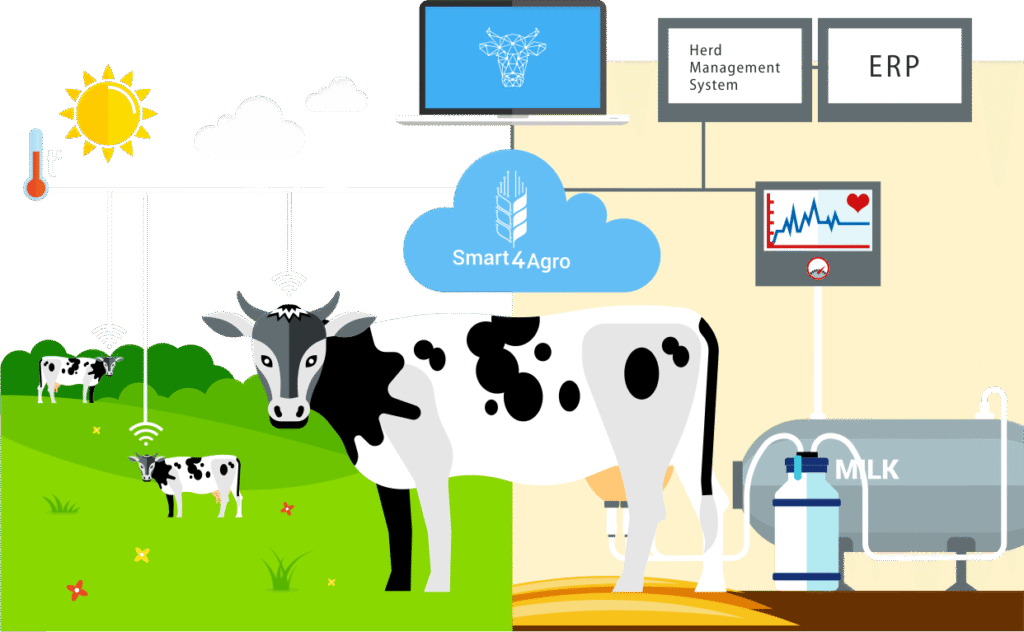
Using data in dairy farming is also useful in many ways.
By tracking what cows eat, drink, and how much gas they produce, farmers can regulate them better and get higher-quality milk.
In cows, data use is similar to poultry, so instead of explaining everything again, let’s look at short examples.
Nutrition
For example, if data shows that a cow eats a lot but produces little milk, there’s clearly a problem. With more data, the farmer can see if the cow is sick, old, or has another issue.
Temperature
Temperature is even more important for cows than for birds. In my previous blog, I mentioned that 1% of agricultural water use goes to services — and the most important of those is cooling cows.
By using data, we can find out which cows are overheating. But that’s not all — even knowing which cows are in normal condition is valuable.
Data can even show which cow breeds produce more milk at certain temperatures. So, by keeping them in ideal conditions, farmers can get more milk.
Labor and Resources
Just like in poultry, data helps track how much time and resources go into each task. That way, everything can be made more efficient.
Lastly, one of the most important uses of data is identifying cows that produce less milk and sending them for processing. Imagine — in a big farm, checking each cow manually would take a lot of time and give weak results. With data, it’s much easier and faster.
How is Data Collected?
So, how do we actually collect data? There are many ways. For example, as we mentioned in feed management, some cows wear ear sensors that track their location, how much they move, how long they stay in feeding zones, and more.
There are also systems to track their weight. For instance, when cows go to the feeding area, they walk over an automatic weighing platform that records their weight and adds it to each cow’s profile.
There are ways to detect bird diseases too. As I said, diseases spread fast among birds. Cameras installed in their areas constantly send footage to artificial intelligence. If any group of birds moves slow, eats less, or sounds differently, farmers can act before the disease spreads. Yes — even sound matters. If a group of chickens has abnormal breathing or vocal sounds, that data becomes useful early on.
Conclusion
Data can be used not only in poultry and dairy farming but across all areas of agriculture. For example, when growing crops, data can help track each area’s condition, diseases, health levels, growth speed, harvest time, and more.
Goodbye!
Subscribe to get notified when new post is published!
