
What is Food Systems?
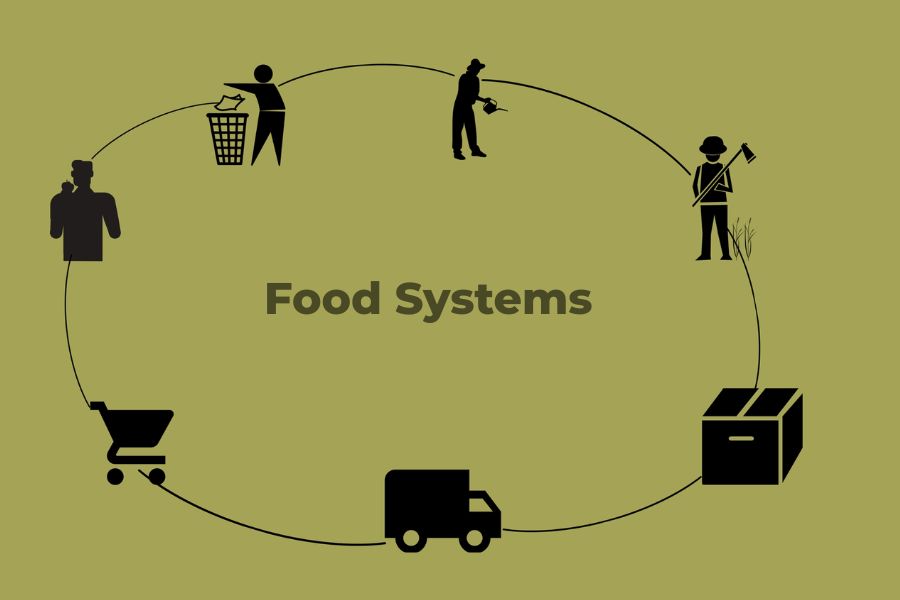
Food systems are the processes involved in food production, distribution, and disposal (managing wasted food). It’s not only what happens on the farm. Most people understand food systems as linear, and simple way of growing food, however, instead it’s too complicated. Here’s food system‘s definition:
A food system is a complex, interconnected network of activities, resources, and stakeholders that spans the entire process of food. It has the following steps:
(But wait! I won’t explain it boring. Think you want to have a cheese brand. The followings are your food system’s steps)
- Production – producing milk
- Processing – turning milk into cheese
- Packaging – simple, package the cheese
- Distribution – giving it to markets, kiosks, and other places to be able to sell your cheese
- Marketing – starting some discounts, adding some design, having SMM (Social Media Management), and other activities that help to sell your cheese
- Consumption – consuming the food
- Disposal – managing those that are outdated, trash, or not ok to sell
Food systems have impact on quality and quantity of the food produced.
Food systems can differ based on geographic, economic, cultural, politicial and other factors. This means food systems are changeable. For example, the food system of Europe and Asia can differ, because of the fact that they are differed in geographically, and economically. Another example is Azerbaijan and Russia, despite being next to each other. To be a little bit more specific, we can say the food system of one state of USA can differ from another state.
Food System Types
Food systems have 3 types: traditional, mixed, and modern.
Traditional Food Systems
This system is mostly for rural areas (villages). The product are being distributed and consumed after processing, which means minimal packaging, limited formal marketing, and mostly informal waste management. The food is mostly achieved from kiosks or small markets. The prices are more affordable, though, food security is weak because there’s no monitoring.
| Advantages | Disadvantages |
|---|---|
| Affordable prices | Low diversity |
| Natural | Accessibility |
| Food security |
Mixed Food Systems
Think of these systems as the mixture of technology and traditional methods, which means not only technology, and not only human beings.
These systems are used mostly in urban and suburban areas. Easier access to supermarkets, high diversity of food, high usage of packaging and marketing. Pricing is usually a bit higher than traditional methods.
Food security is better protected because monitoring is possible through technology. Information about the food is more accessible, the estimated shelf life of the product is known, products get name, and more stores open.
| Advantages | Disadvantages |
|---|---|
| More markets | High prices |
| Product diversity | Medium level tech |
| Food security | |
| More information |
Modern Food Systems
These systems are mostly done by technology, which means not only tractor, but also new technologies are involved. However, most people understand it wrong. It does not mean using only technology, it’s using technology if a task can be done by it properly, faster, more efficient, and other factors. For example, instead of hiring a couple of workers to water plants, a farmer can buy a drone, and will water entire field without extra employees.
It’s all about these systems, the rest is like in mixed one. Just using new technologies is appreciated in these systems.
| Aspect | Traditional | Mixed | Modern |
|---|---|---|---|
| Production | Smallholder, local, and seasonal foods | Local smallholder and larger farms, more seasonal access | Wide variety, global production, year-round availability |
| Storage & Distribution | Poor roads, limited storage, leads to waste | Improved infrastructure, but unequal access | Modern roads, cold storage, long-distance transport |
| Processing & Packaging | Basic processing (drying, milling), limited packaging | Processed packaged foods, longer shelf life | Highly processed, convenient but often unhealthy |
| Retail & Markets | Reliant on informal kiosks and wet markets | Diverse options, including formal and informal stores, more street food | High diversity, including supermarkets, fast food, and fine dining |
Conclusion
In this blog, we explored the journey food takes before reaching our plates. Next time you eat a meal, try to think about it from this perspective :))
References
- ADA University, Science for Agricultural & Food Systems II lesson I
Subscribe to get notified when new post is published!
