
Fake Chicken – The Dorito Effect #2
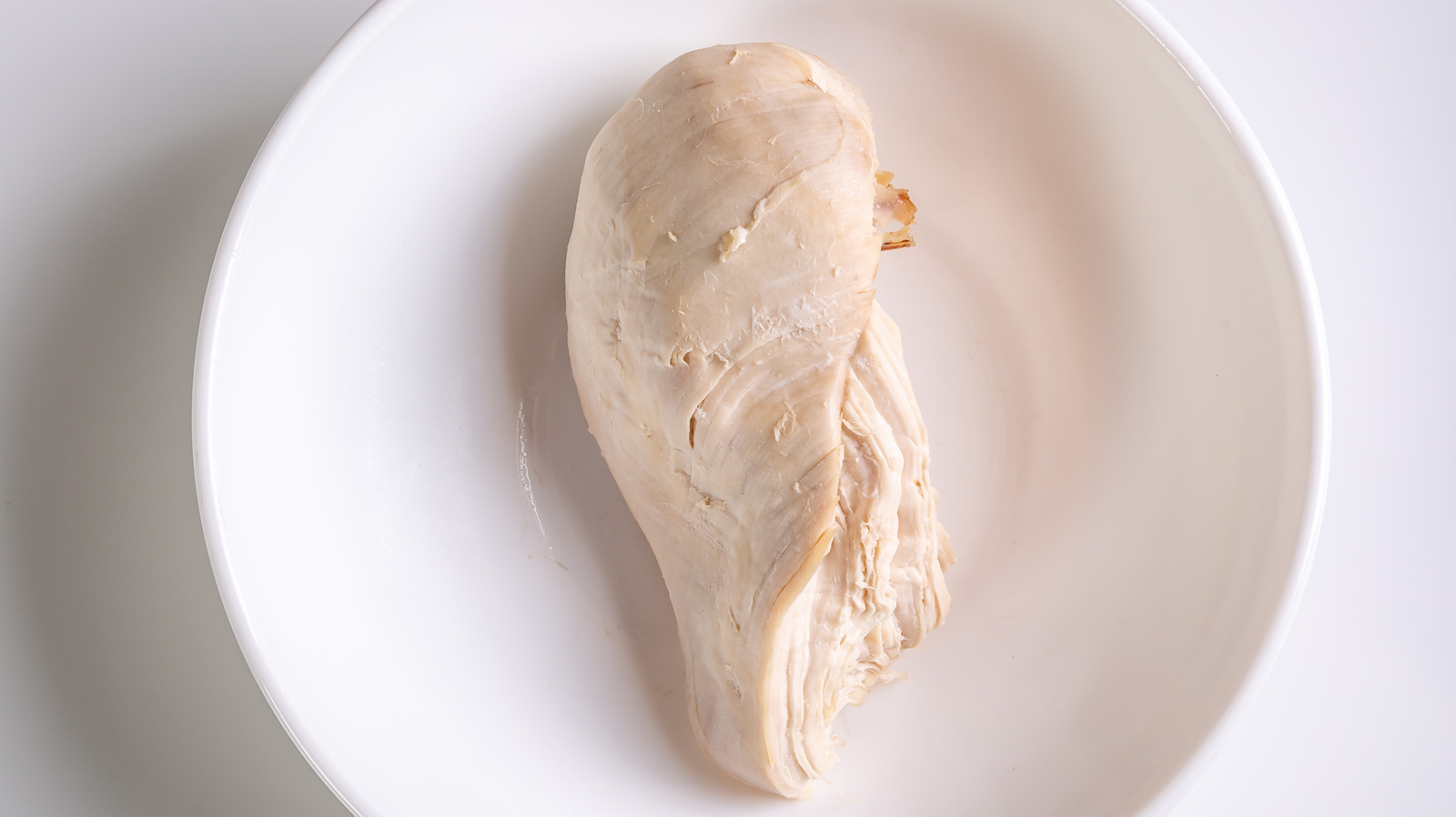
So in this section we’re going to talk about how today’s chickens have been made less tasty.
One day, an American woman buys a chicken, and this chicken makes her cry a lot. But the chicken itself isn’t anything special. The only thing is that its legs are a bit longer than normal chickens, its breast is smaller, and its color is a bit yellowish. This was just a regular village chicken. The thing is, America had reached a point where people hadn’t seen this kind of chicken for decades. The woman buys it and heads home.
This woman, who had been married for 48 years, got really disappointed because of the chicken. The reason was that her husband always said about her cooking: “It doesn’t taste as my mom used to make.” Honestly, we can’t really blame the guy either, this was his favorite food. The woman would always try new recipes, add different spices, but that answer never changed.
The woman decides to cook this “village chicken” and try her luck one more time (I know it’s not hard to find village chicken where we live (Azerbaijan), but keep reading and you’ll see we’ve got our own issues too). And yeah, the result is predictable. The old man absolutely loves the food and yells: “Now THIS is the chicken my mom used to make!” The woman gets so happy she goes and calls the farmer crying, just to say “thank you.”
We’ve probably all heard older people say: “Nothing tastes like it used to anymore.” And honestly, they’re almost right. Scientifically, a lot of foods have lost much of their taste and nutritional value. But the best example of this is chicken itself. Basically the most Doritos-like food out there! (If you don’t get the reference, read this blog)
Without dragging it out too much, let’s go into the history of chicken.
So, a guy named Howard Pierce started a competition called Chicken of Tomorrow. He owned one of the biggest grocery chains of the time, A&P Food Stores. For people in the chicken business, the 1940s were both the best and the worst years. World War II had just ended, but that actually helped chicken farms a lot. Americans started eating twice as much chicken. But Pierce was worried chickens would eventually run out and people would go back to red meat. So he wanted to prevent that early on.
Makes sense, but what Pierce did was kind of done without thinking much about the environment. It would’ve been better if he also considered the future.
Back then, chicken wasn’t even that cheap, it was byproduct. The main focus was eggs, then the chicken itself. People didn’t eat that much chicken. Even chickens all came in different sizes (unlike today’s almost identical ones).
Pierce thought what people needed was consistent, always-available chickens with big breasts. So he launched a $10,000 competition and defined a wax model. Whoever could grow chickens the fastest and match that model best would win the prize.
In 1946 and 1947, the Chicken of Tomorrow competition took place. In the end, a group raised chickens in identical cages and fed them a controlled diet. That diet had at least 20% protein, 3.5% fat, and 7% fiber. It took 12 weeks and 2 days (86 days) for chickens to reach slaughter weight (~1.7 kg).
As far as I know, village chickens today are roughly like this. So basically, what was the fastest back then is like the slowest today.
This was kind of an “advancement” in agriculture. There were improvements before that too. In 1923, chickens took 16 weeks (112 days) to grow to about 1 kg. By 1933, they were about 220 grams heavier and matured 2 weeks faster. But the chickens from the Chicken of Tomorrow competition were a bit different. They got heavier, but had less nutritional value.
But how did they taste? Nobody really knows. The judges back then didn’t care about taste, they measured weight and speed.
After this “progress,” the Chicken of Tomorrow competition was held again. This time things were a bit different.
Paul Siegel was a 15-year-old kid in 1948. He would later become one of the most important researchers in poultry science. As soon as he heard about the competition, he paired a local rooster and hen, raised the chicks in long and narrow containers, and didn’t let them go outside. Because every step outside meant lost growth time. After 12 weeks, a government agent came to measure the chickens. Soon after, Siegel got the good news: he had won. But he wasn’t even surprised. He just said, “I knew I was pretty good.”
That young guy’s success would later contribute to the decline in chicken taste. People learned how to improve chickens through selective breeding. By choosing which rooster and hen to pair, they could change the genetics of the chicks. You could even end up with chickens completely different from their parents.
By 1951, the winning chickens grew 14 days faster than those in 1948. By 1973, that number dropped to about 60 days. By 2006, chickens were growing so fast and getting so big that Americans were eating about 5 times more chicken than in 1948.
The Chicken of Tomorrow competition actually never really ended. Siegel spent his entire life studying how chickens could be improved through breeding. He raised around 200,000 chicks and published over 500 scientific papers. He realized there’s always a trade-off in chickens. (A trade-off is when you sacrifice one thing you like to get something you like more.) For example, there’s a trade-off between weight and egg production. That’s why today’s chickens are split into two types: egg-laying and meat chickens. Expecting meat chickens to lay eggs is kind of pointless, they’re basically just designed to grow bigger.
Those once-called “agile” chickens now have such small legs and such big breasts that they struggle to stand. And they look similar to today’s “star” women (not my words, the author’s).
A poultry science journal article shows that if humans grew like today’s chickens, a 3 kg newborn baby would weigh around 300 kg in just 2 months.
Even though Siegel studied chickens deeply, he also loved eating them. He even admits today’s chickens don’t taste like the old ones. The tastiest chicken he ever had wasn’t the Chicken of Tomorrow, it was the chicken of yesterday.
Yeah. Even if not in full detail, we took a look at the history of chicken. Real tasty chicken used to be the kind that ate everything: greens, leaves, seeds, insects, mice, and so on. People raising chickens didn’t really know much about their diet. After a while, those in poultry farming knew that feeding chickens ground corn could make them grow fast, but it would also cause diseases. So they tried to find a way to grow them fast but still keep them “healthy.” The answer was carbs.
Now let’s look at what the author said about a farm he visited:
“I visited an industrial suburb area where workers were unloading cardboard boxes from an 18-wheeler truck. Inside the boxes were thousands of frozen chicken breasts, which were dumped into grinding machines with water and spices (salt, pepper, turmeric, etc.). This was the first flavoring step.
The chickens came out of the grinder as a grey, strongly smelling blob. Then it was packed into plastic bins and sent to the next room. There, workers in white boots fed them into loud machines. Out came perfectly shaped nuggets. Then came the long flavoring process: they were coated in batter, breaded (explained below), and deep fried. After all this, the nuggets were frozen and distributed to restaurants.
Breading means dipping in egg, flour, and breadcrumbs.
According to the manager, the real profit came from two things. First, breading. Second, water. The more water you add to nuggets, the more profit you make.
All these processes are called flavor solution. If you think chicken still tastes good today, the biggest reason is this flavor solution.
A cookbook from the 1900s says you only need a bit of salt and pepper to cook chicken. Meaning, chicken used to be so tasty it didn’t even need seasoning.
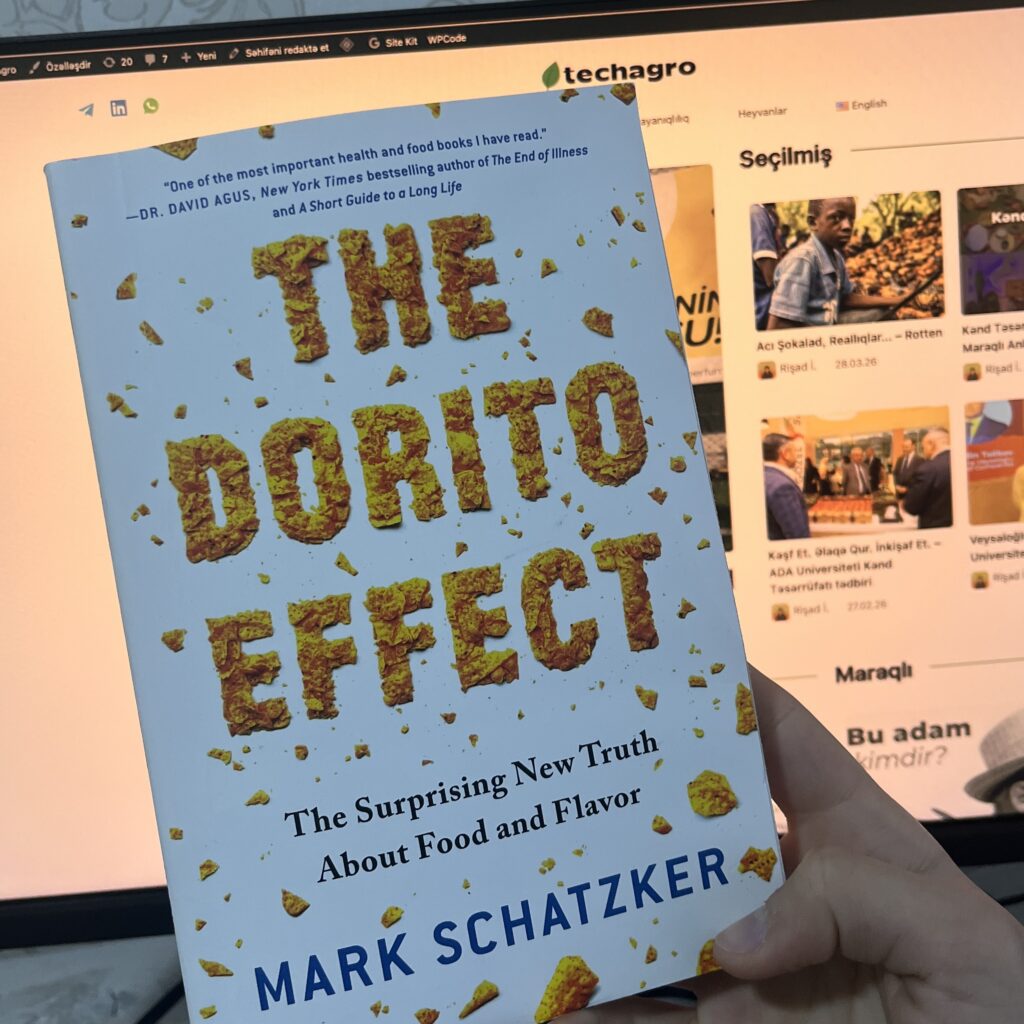
Yep. What you just read comes from the book The Dorito Effect. After buying it, I decided to write a blog every time I finish a section. This was the second part. Hope you liked it. More coming soon, inshallah!
Subscribe to get notified when new post is published!
